I was not ready for today to start. I woke up at 5:50 AM and did my normal routine. Showering, dressing up, getting ready for breakfast, and packing up to leave the hotel. The only thing different about today than the other days on this trip was the fact that today I was feeling very slow and lazy. Maybe I did not want to get ready to leave or maybe I was getting used to staying in hotel or maybe I was just tired. I do not know. Nonetheless, I got ready and went downstairs by 6:25 AM. I had also forgotten today was Saturday, so breakfast would be at 7:00 AM. I had bunch of time to kill, and luckily I got a phone call from my parents and my grandparents and one of my uncles all at the same time. I was on a 4 person phone call for almost 1 hour. The best breakfast I had on this trip was today, even though they had just about the same food as every other hotel. The only difference was they had bigger biscuits, so I was able to put more egg and jelly on them. We left our final hotel by 8:05 AM and made our way towards our final historic site.

One hour and a half in, we stopped at a truck stop for some snacks, drinks, and other random stuff that we needed. The first thing I did was to go to the bathroom. Next up, I spent maybe 15 minutes trying to find me something to eat. I was not making the same mistake I made last time, so this time I made sure and asked exactly what was on the pizza that looked just like cheese pizza and got me a slice of it with some water.
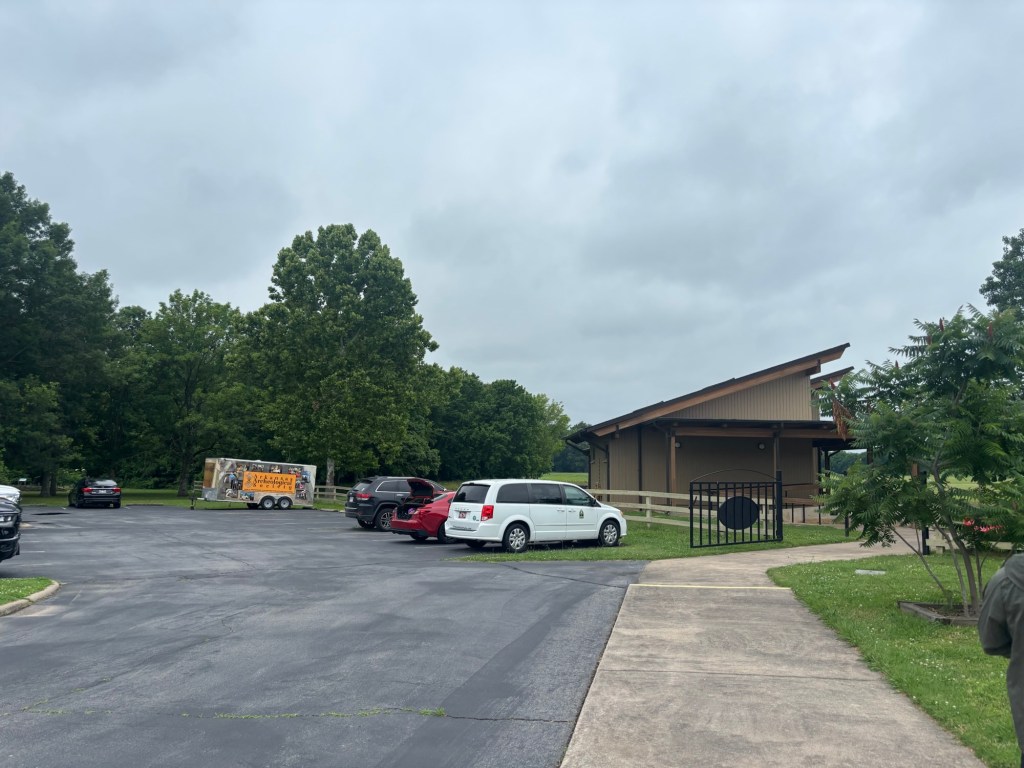
We arrived at the Plum Bayou historical site at 11:40 AM. We were told my professor Dr. Lawson, to first go out on the trails, go through all of the mounds, and read all of the signs put on the trails because it was supposed to start raining in the next couple of hours. I followed those instructions and went straight out on the trails. Before I start talking about the trails, it is important to know some of the historical facts about the site and it mounds. The plum bayou mounds were made in the period (A.D. 650 – 1050) and features 18 mounds arranged around two plazas. Mound A is the tallest at roughly 49-50 feet. The whole complex is enclosed on. Three sides by a ditch and earthen embankment wall, with Mound A/B aligned to solstice and equinox sunsets. Additionally, the Plum Bayou Mound Archeological State Park was formerly called Toltec Mounds.
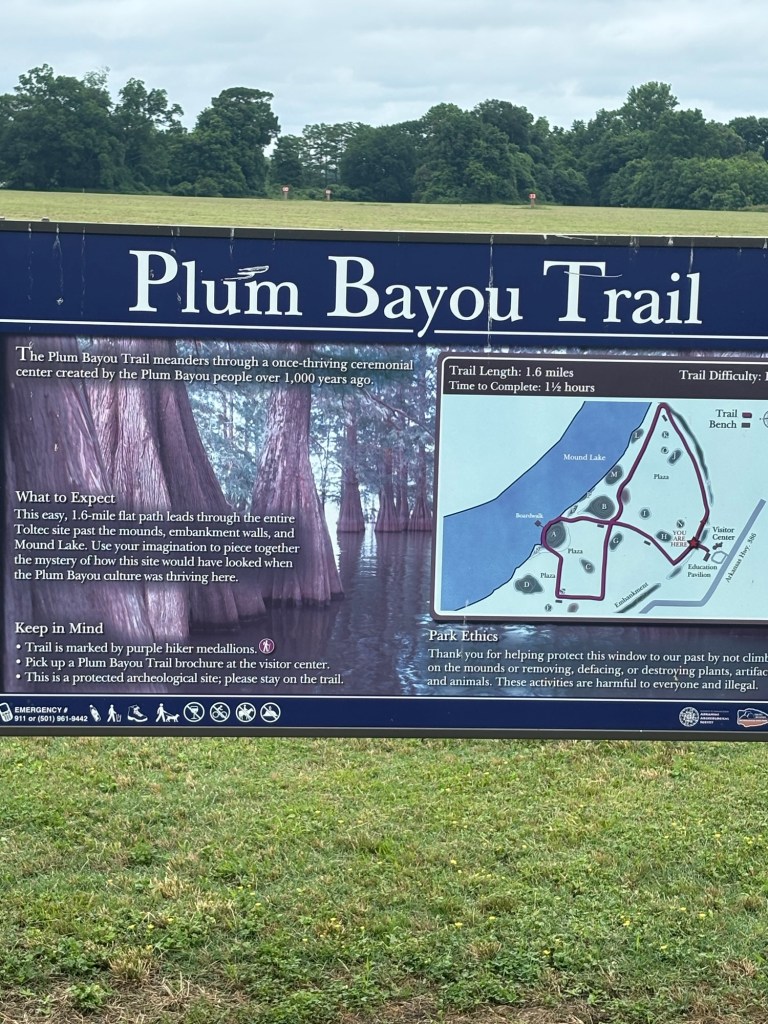
As shown here by the image, the Plum Bayou Trail meanders through a once-thriving ceremonial center created by the Plum Bayou people over 1,000 years ago. The Plum Bayou Trail is approximately 1.6 mile long and it takes us through the entire Toltec site past the mounds, embankment walls, and Mound lake. Following this trail we were able to see all of the mounds and also able to get a good idea of how this site would have looked when the Plum Bayou culture was thriving here.
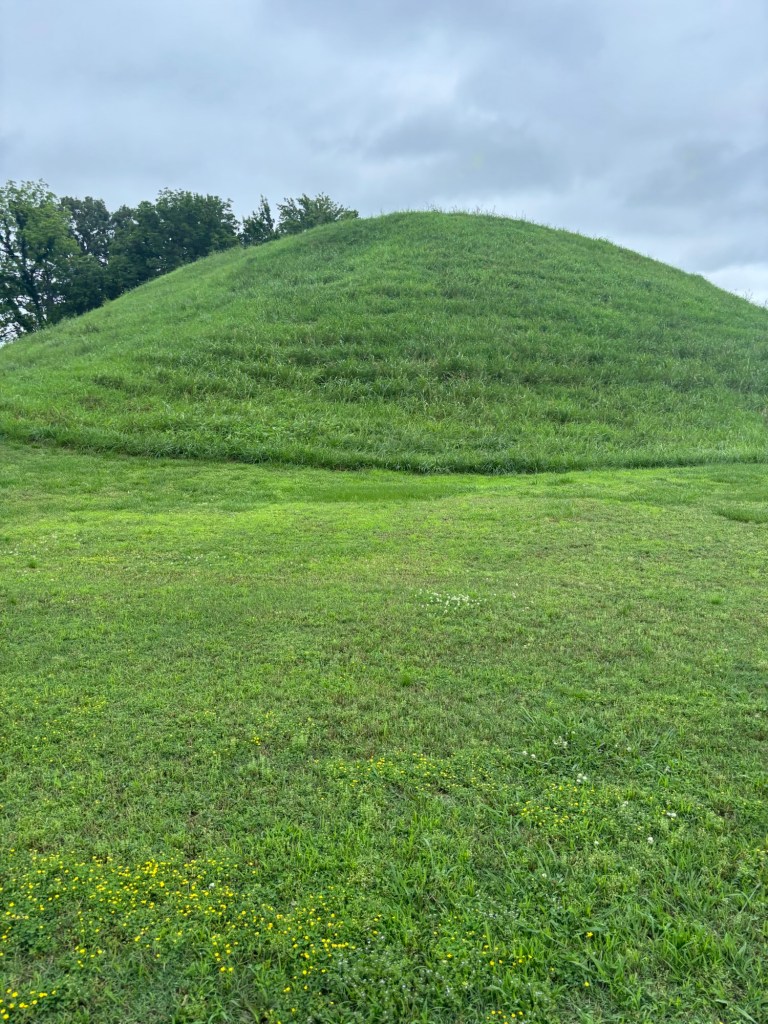
Here is a picture of Mound A. This is the tallest mound in the whole Plum Bayou site at approximate 49 feet. Mound A is the centerpiece of the Plum Bayou Mounds, standing as a monument to the engineering and astronomical skill of the Plum Bayou people. It is a flat-topped platform mound, which originally would have supported religious or political building on its summit. From Mound A, the fall and spring equinoxes align with sunsets directly over specific points in the landscape.
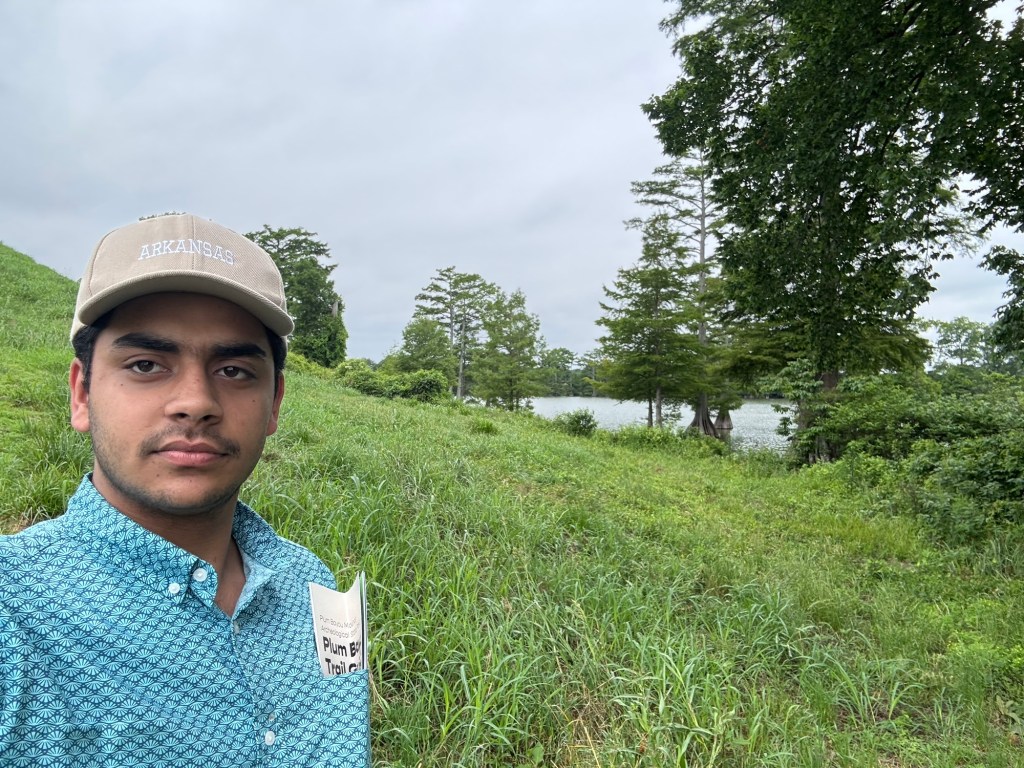
The trail leading to the Mound lake was overgrown, so it was blocked of. This is the best picture I could get of it. The Mound lake is a very important part of this site because it shows how wherever remains of an ancient culture is found there is water nearby. Any group of people would rather live next to a body of water than far away from it. Water is a necessity to survive.
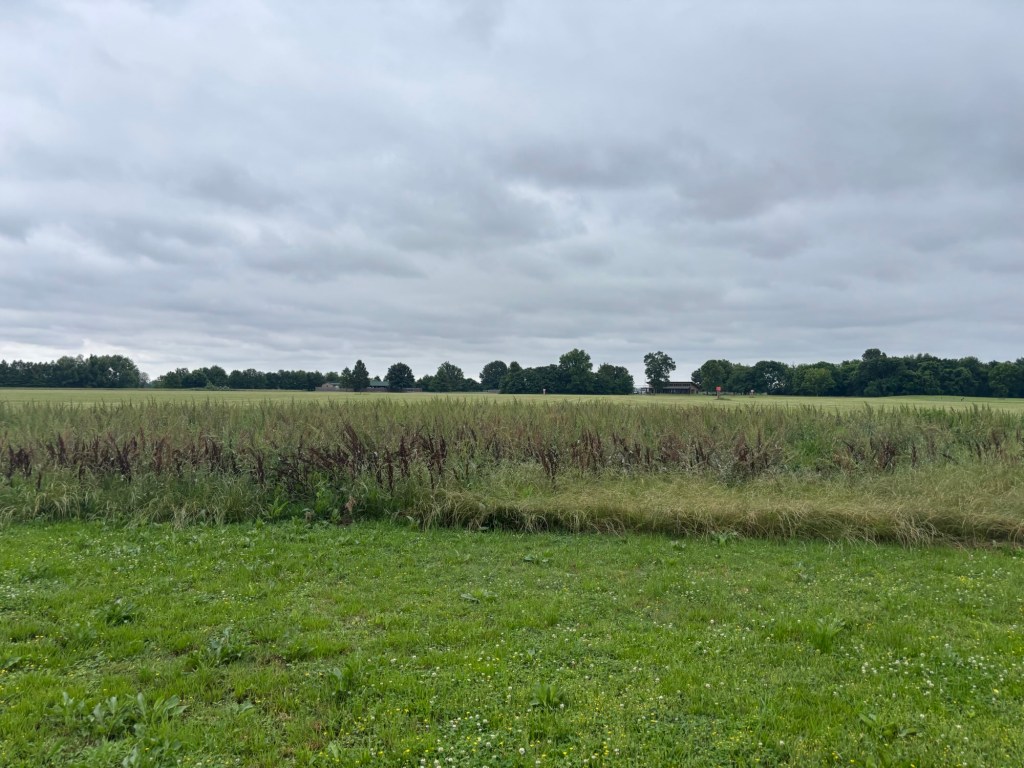
In this vast field are a great number of other mounds that were built by the Plum Bayou people for many uses, and one of those uses was astronomical alignments.
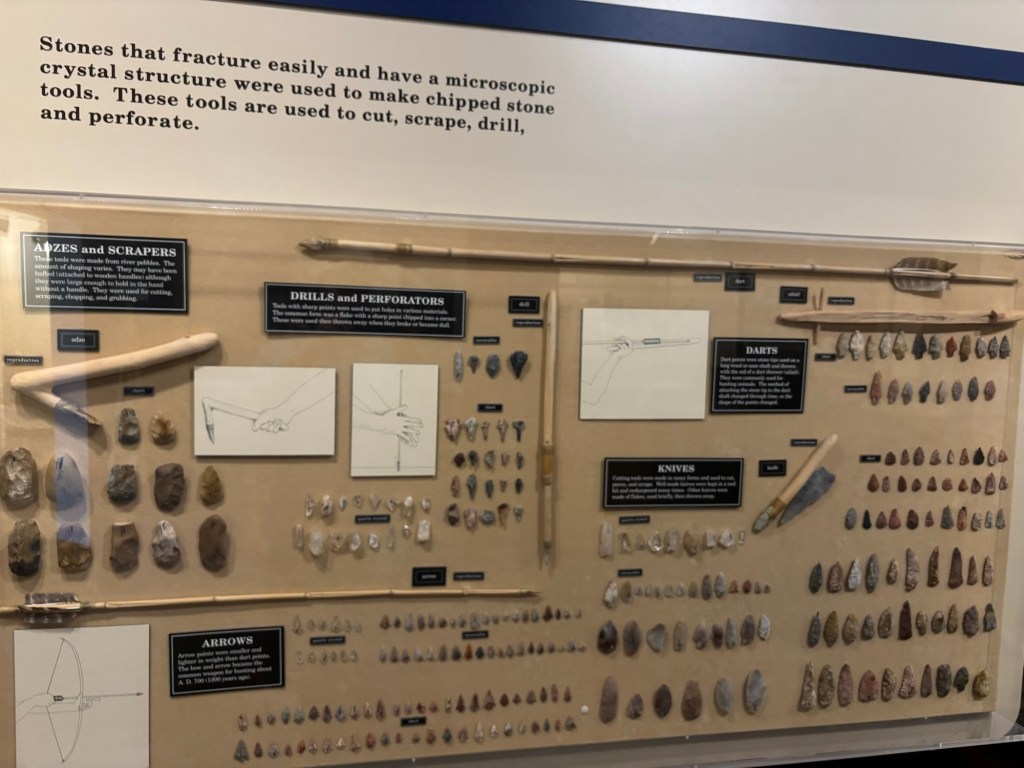
Inside of the site were many different artifacts that were recovered from the Plum Bayou Mounds. This picture shoes how the prehistoric tools that the Plum Bayou People used were made, and what those tools were used for.
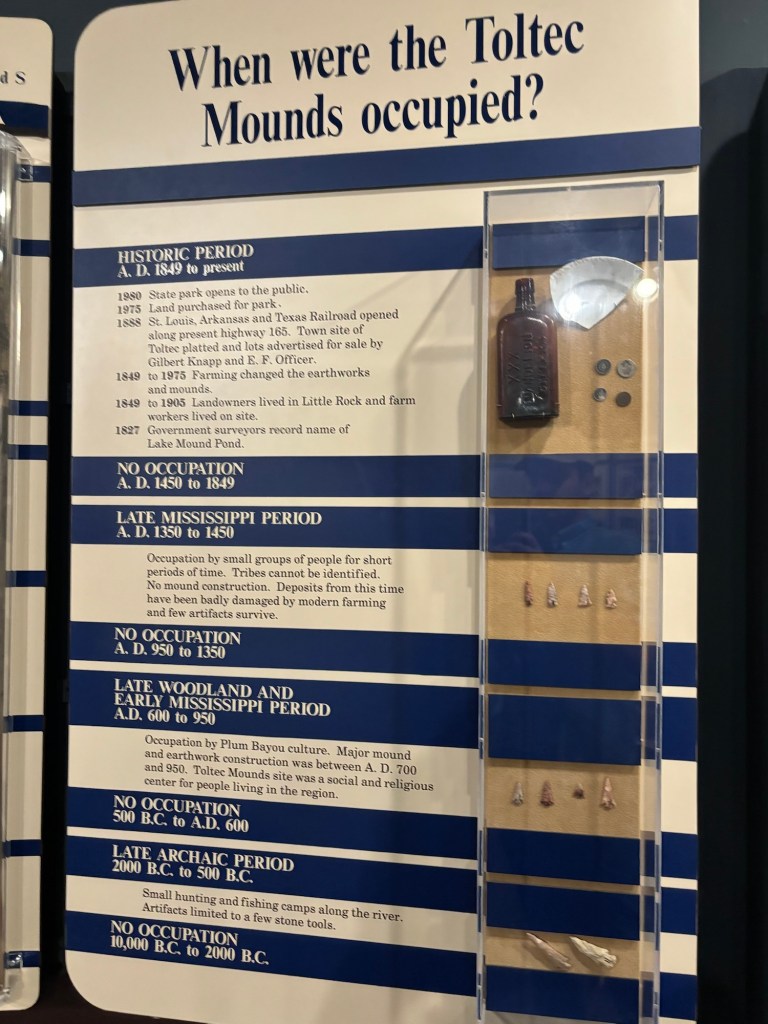
This picture shows the periods when the Toltec/Plum Bayou Mounds were occupied. No occupation from A.D. 1450 to 1849, late Mississippi Period was occupied by small groups for short periods of time, No occupation from A.D. 950 to 1350, Late Woodland and Early Mississippi Period A.D. 600 to 950 was occupied by Plum Bayou Culture.
After finishing the tour at the Plum Bayou Mounds, we all got loaded back on the bus and headed closer to home. We were approximately 3 hours away from Fort Smith. After around 1 hour we stopped at Quick-trip to drop off one of my colleagues, but they were running rate. We all decided to get lunch at the truck stop, so I got me a personal pan veggie pizza to go that I ate it the bus. We got to UAFS at 3:54 PM, and as soon as we got there I ran to my car and headed home to Ozark. After I got home I got changed and went to work. Rest is history.
 DailyHistMaymesterTrip.blog
Leave a comment